“…it seemed to me that I myself was what the book was talking about…”
Journey Together – In Search of Lost Time
By
Catie Jarvis & Bonnie Jarvis
Art: Marianne Goldyn — quantum artist | “Beyond the Blue Moon” — Blue Expo 3rd Place Abstract
(Swann’s Way: In Search of Lost Time by Marcel Proust. Translation by Lydia Davis)
This series is a compilation of 12 autobiographical-fiction letters between two sisters, inspired by the reading of Swann’s Way — In Search of Lost Time by Marcel Proust (which is also considered to be a semi-autobiographical work). Each letter is illustrated and illuminated by artwork from ZO’s Blue Expo, blending the visual and the linguistic, to open the mind.
_______________________________
 These letters are being presented in 4 parts:
• Parts I — III
• Parts IV — VI
• Parts VII — IX
• Parts X — XII — (You are here)
• Blue Expo ARTS & LETTERS Only
X.
Dear Sister,
In these later pages of Swann’s Way, I’ve been thinking back to what you said about a definition of love, or a lack thereof.
It’s interesting, because with love, there is a sort of magic which life would be less-than without, a thrill, a spike in perception like a first drug trip, but there is also so much that pulls us from our sense of self and knowing, causes us to stray from our authenticity, goodness, well-being. Love can so quickly turn demonic:
“…the quest for the pleasures that his charm gave us is suddenly replaced in us by an anxious need whose object is this person himself, an absurd need which the laws of this world make it impossible to satisfy and difficult to cure – the senseless and painful need to possess him.” (239)
Proust begs the question: Once one releases the possession of the beloved or the fear of it slipping away, what is left?
I love the moment on page 242 when Swann tries to hold on to a vision of the Odette that he does not yet possess, that he has not yet kissed. I try and think of my loves this way. Before they were tainted by the having, and in turn, the possibility of losing. M., that night we met at a little dorm-room party at Ithaca. The olive Kanga hat he wore. The walk we took in the rain. A. standing on the dock in Lake George, reaching over to point out the eagle in the distance, brushing his arm on mine. P., in a little pizza joint in Santa Monica, my hands on his chest, and him telling me we should hurry so that no one thought we were gone too long, acknowledging that there might be something wrong with us being gone too long. All those befores. And then the afters.
I used to think that I could do love differently, do it right. I thought that M. and I could. I really did. We had so much going for us. He loved you as a sister, and I’ll always be sorry to have ruined that. The loss of M. was the shattering of my diluted self-perfection, which I can now see from a growth standpoint was inevitable, and since, I’ve been trying, like you, to figure out what ‘to love’ can possibly mean.
Proust is masterful, I think, in observing the anfractuosity of memory, love, and ultimately the human condition. I think his kind of observation requires a level of empathy, deep inquiry, and even love. Like this perfect passage on page 320:
“for one thing love and death have in common… is that they make us question more deeply, for fear that its reality will slip away from us, the mystery of personality. And this disease which was Swann’s love had so proliferated… it was now so much a part of him, that it could not have been torn from him without destroying him almost entirely: as they say in surgery, his love was no longer operable.”
Proust is an observer of people and of self. Trying, at all times, to decode the workings of the mind. I think that I’m like that too, more than most people are. I try hard to understand what people (including myself) are thinking, feeling, why they’re doing what they’re doing. I think for me this may be my truest form of love.
The deepest part of me that writes, the part that could never stop writing, that finds solace in this hard world only knowing that I can turn it into words, is the part that writes to reclaim the memories of all that’s past and to honor them with my truest and deepest love. This part of me, I think, is very Proustian. I write to hold what cannot be held, and in the act of trying to hold it anyway, I find relief. Like that summer walking the “right of way” along the tracks with you and M. and that night when the radio turned on all on its own, and we three wrote that song, what was it called? “A light cloud, a bright cloud… sunshine through transparent light. Are you ready for a supernatural manifestation, are you ready?” We laughed until we cried. As I write it now, moment is love.
P.’s at the movies by himself tonight, Sky’s asleep, and it’s very nice to be in the house alone. I get much more done. I feel free. When I was younger, I really liked to be alone. Then I got lost. Maybe I’m close to found, now, or at least peeking out. Perhaps I can’t truly be found until we are back together again.
I can only be alone and in company when I am with you.
Love,
C.
XI.
Sister,
Art: “Dumpster Detail” — Chuck Runnoe — Finalist Blue Expo
Some of Runnoe’s favorite subjects are close-ups of trash containers, tire tracks in mud and snow, pavement repair, vegetation, and found objects. He tries to identify and record what is interesting, significant, even beautiful in these mundane subjects.
I’m so ready to not be here anymore.
I’m trying to appreciate each day and all the time I have to read, exercise, contemplate. I know it won’t be the same when I get out, I won’t have this time. Still, it’s hard. They call this ‘short and shitty’ – when you know it’s almost over, it’s hard to stay positive.
My love for my partners has been so mixed with my love for my drug, it’s nearly impossible to untangle. I thought of the moment on page 278 where Swann realizes that Odette is a kept woman, and that he’s in fact keeping her. Yet, he can’t be bothered to allow the thought to hold on very long. This is what love does. It blinds us, as Avidya, and ego, and any other vice might.
But love also lets us see. I think, like everything maybe, it encompasses all.
I can’t believe I will see you so soon. Days and lifetimes away.
What a journey,
B.
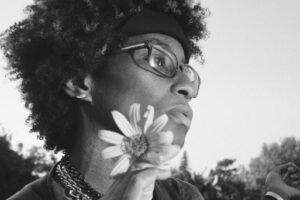
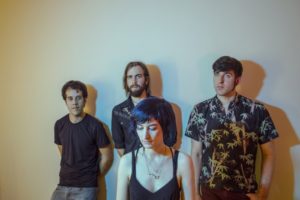
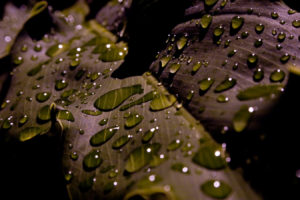
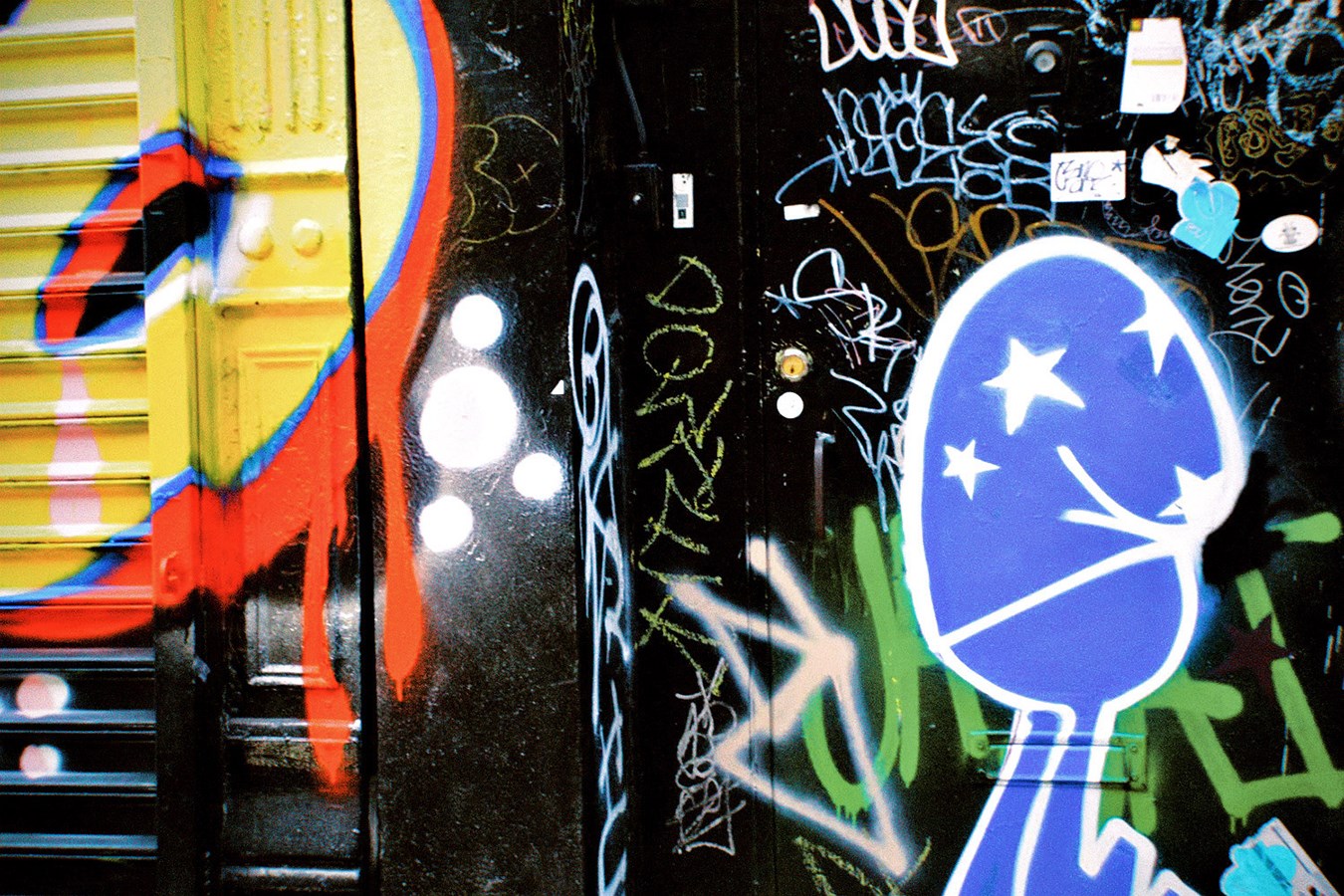
Credits for small Artist Thumbnails above | Top Middle: IAN HILL — MOLLY LAY — LINDSEY MORRISON GRANT — KATIA BELMADANI — | Bottom Row: SHAN OGDEMLI — CHERYL PETTIGREW — ISABELLE DEBRUYERE — GJ GILLESPIE — DAVID NIENOW — ANUM FAROOQ — CHERYL PETTIGREW — MARISOL BRADY | (Details for Blue Expo ART Proust Article available at this link)
XII.
My Courageous Sister,
I spent this whole summer reading Proust.
The summer went too fast and Proust too slow, so perhaps it was the right choice for the sake of balance. Proust with his leisurely Combray days of childhood, meandering through flowered paths and sentences with the “immense edifice of memory.” Sky, hiding behind shaded trees from which she pops out, and yells “peek-a-boo” with the unabashed glee of youth. And each time her little chubby-cheeked, big-eyed face emerges, it’s as if she’s grown into a different child, gained understanding and perspective, that she didn’t have only the moment before.
Swann’s Way is one long walk through love and memory. A scrupulous and philosophical study of the ways that these two things control us, with no hope of us being able to control them in return. The plight of humankind. And yes, the plight of mother.
Time is impossible right now for me as well, but in rather the opposite way. Each day Sky becomes someone new, and I suppose that I do too. As I fill with so much love for almost-three-Sky, and try to hold each moment in my mind, knowing that I cannot. Knowing that this baby turned child that I love so fully, right now, will never be again. As she is, this summer. And that I have no ability to love her any less, with this knowing.
As Proust says, in closing:
“The reality I had known no longer existed… The places we have known… were only a thin slice among contiguous impressions which formed our life at that time; the memory of a certain image is but regret for a certain moment; and houses, roads, avenues are as fleeing, alas, as the years.”
I can’t wait to know you again.
I feel I already do.
We have journeyed so far together, and there is so much more to come.
Maybe when you get out you can help me move time slower, and I can help you move it faster, and we’ll be at a perfect pace, some kind of balance.
To think we’ve only read the very first part of A Journey in Search of Lost Time.
Perhaps, each summer from here on out, we can read a new volume, and each may find us at the right time. I’m glad that we have chosen to read together the longest novel ever written, and I look forward to all the parts to come.
Most impatiently awaiting your arrival,
C.
Artwork above: DAVID JOSEPH FLESHMAN — “Beauty of Life”
—THE END—
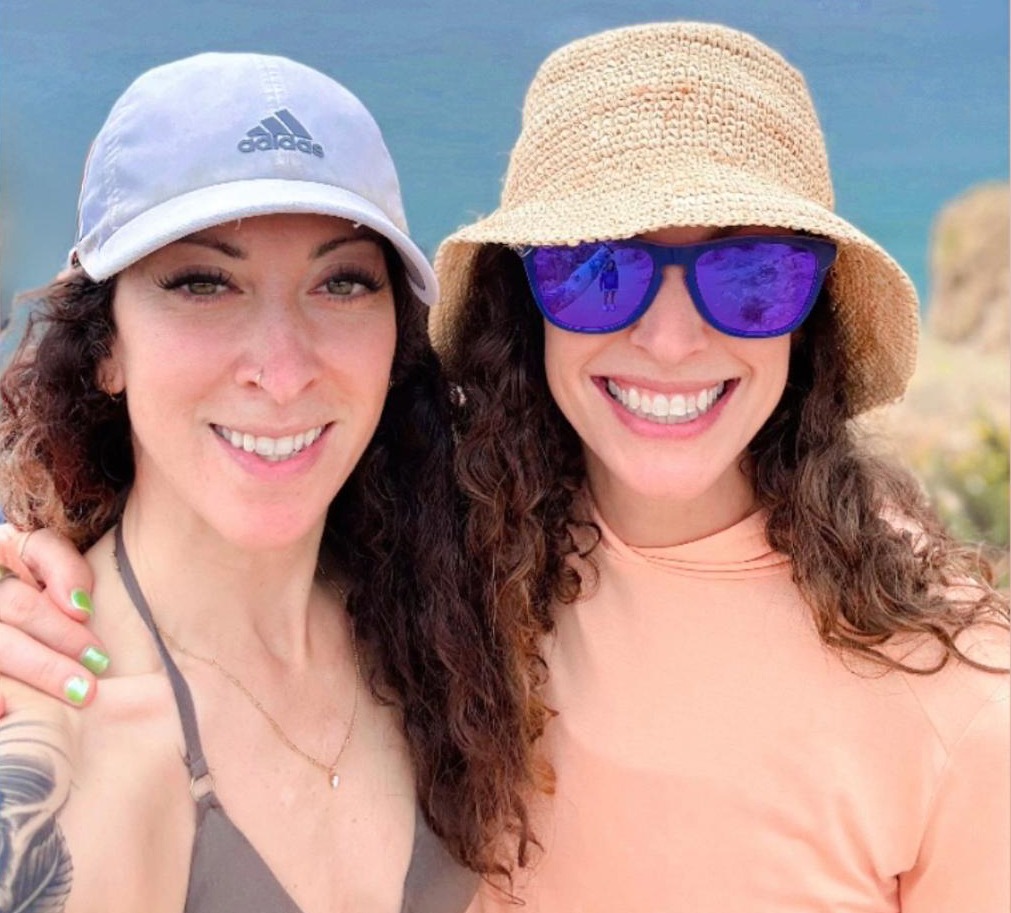 Catie Jarvis is an author, English and Creative Writing Professor, yoga instructor, competitive gymnastics coach, surfer, wife, and mom. She grew up on a lake in northern New Jersey and now lives in Los Angeles. The Peacock Room is her first novel. Stop by catiejarvis.com, Instagram @30inLA
Bonnie Jarvis is a competitive horse trainer by profession and a writer, singer, and artist at heart. If she’s not riding a horse, then she’s probably reading a science fiction book, painting, playing flag football, or rescuing a kitten somewhere in Los Angeles.
As you will note, the closing of each letter is signed either “B” for Bonnie, or “C” for Catie.